
We built the file transfer we were sick of waiting for.
fileCC started life on a riverbank, not in a boardroom: one cameraman's answer to decades of watching transfers crawl, stall, and leave everyone guessing.
From Red Star to real-time
Same job, four completely different ways of getting the pictures back.
Film, and a race to the station
Rushes in a can, a dash to the Red Star office, and a quiet prayer that it made the last train before the lab and telecine bookings. If you remember that particular flavour of stress, we should talk.
Tape
Canisters became cassettes. Progress, but you still had to be somewhere, in person, with a bag.
Digital arrives: the files just keep growing
No more physical media, which sounded like it would solve everything. Instead the resolutions crept up, the camera-raw folders got heavier every year, and a new problem quietly took the old one's place.
Big files, slow transfers, and a lot of "just checking in"
Posting a hard drive is often slower than the client can wait for: that's before you even get to customs paperwork on a cross-border job, and the cost of shipping it twice if it goes astray. The transfer sites that were meant to fix this time out halfway through a big upload, and you start again from zero. Meanwhile the client hears nothing until it's done, so the polite nudges start rolling in.
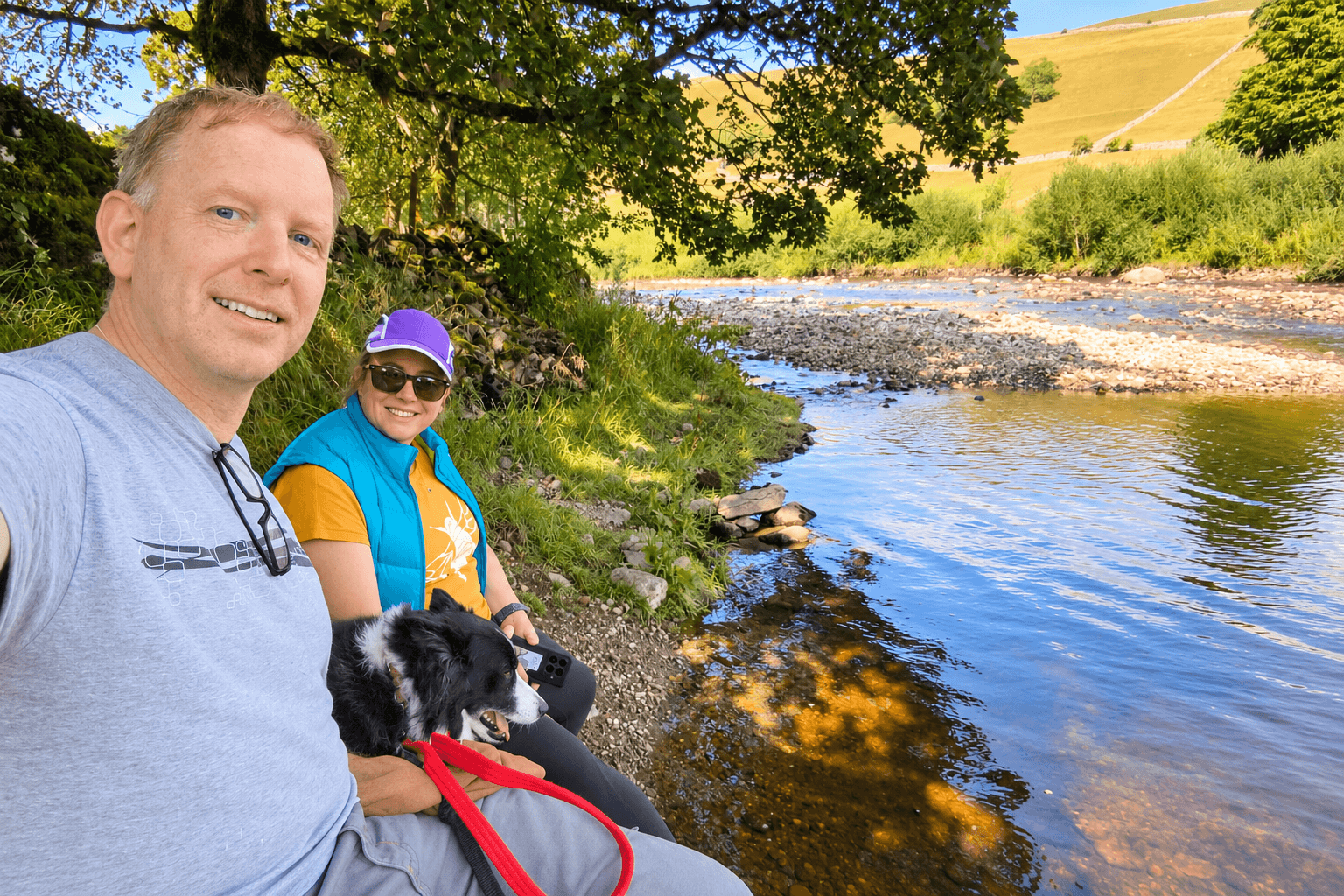 Chris, mid-epiphany: River Wharfe, Yorkshire Dales, August 2026
Sat on the banks of a river in the Yorkshire Dales, I decided to just fix it.
Years of using large-file transfer services had left me with the same short list of complaints every time: uploads that time out on a shaky connection and force you back to square one, and a recipient who gets no confirmation, and no way to start pulling the files down, until the whole thing has finished. On a deadline, that silence is where the "just checking in" messages come from.
What I wanted seemed simple on paper, but nobody had built it: tell the recipient the moment the upload starts, not when it ends. Let them watch it arrive, in real time, so a slow connection reads as slow and not broken. And let them start downloading the parts that have already landed, instead of sitting through two waits stacked on top of each other.
Common sense, really. So I got to work and built it.
How fileCC does it differently
Four things that change how a big transfer actually feels, for both ends of it.
Notified at the start
Your recipient gets the link the moment the upload begins, not whenever it happens to finish.
Live, on both ends
The same progress bar, visible to sender and recipient alike. Slow is visible. Silence isn't.
Download before it's done
Finished parts are pullable as they land, so the wait is halved, not doubled.
Priced before it moves
An instant quote up front, free under the threshold: no surprise invoice for a big camera card.
Not just for camera crews: anyone moving big files fast.
I built fileCC for the job I know: RAW stills, video masters, whole camera cards that need to land with an edit suite before the deadline does.
But none of that logic is specific to television. Photographers, agencies, architects, studios, anyone who's ever watched a progress bar crawl and wondered if it had quietly died; this is for you too.
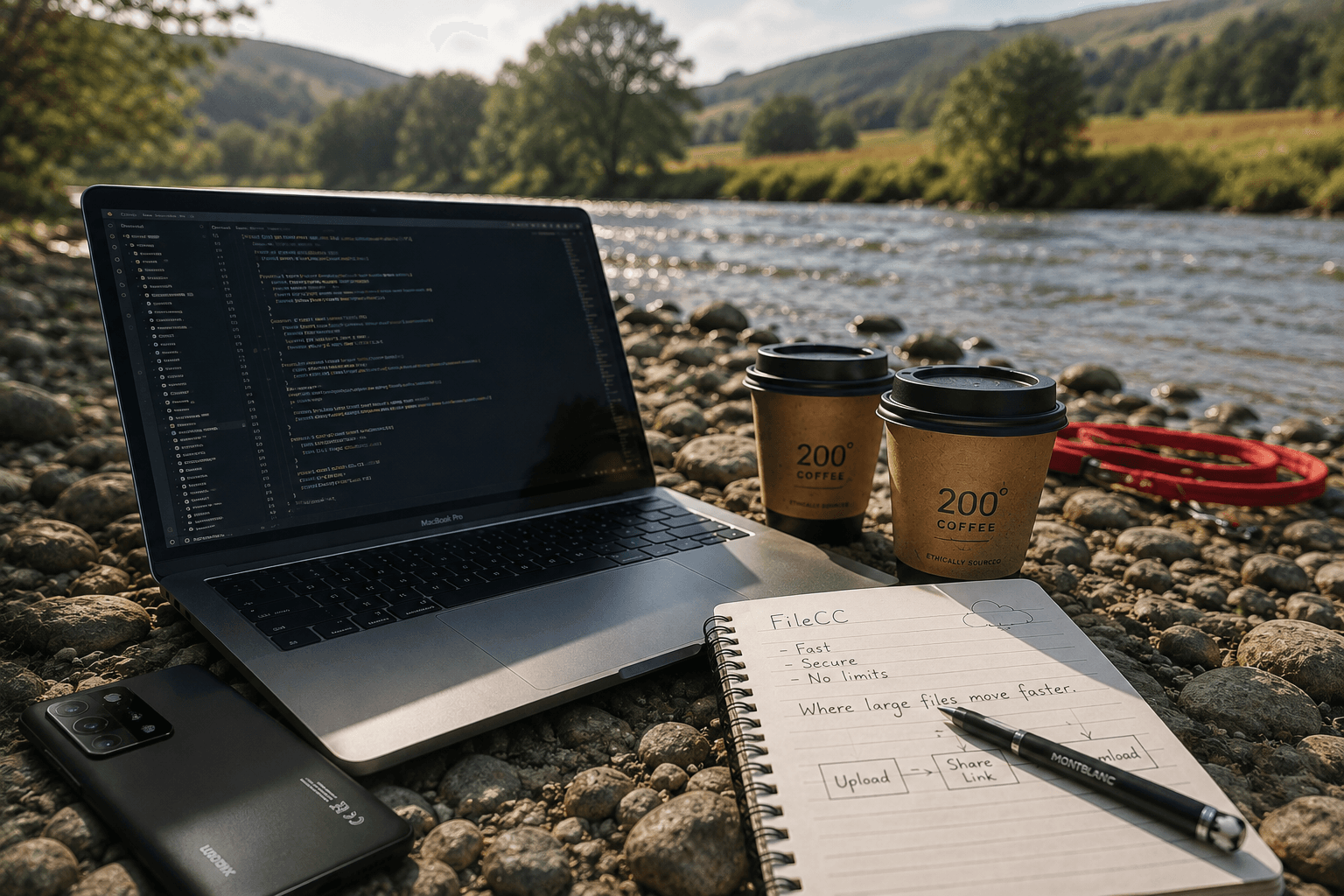 Several coffees deep, turning a riverbank idea into a working website
See it land in real time.
No account needed under the free threshold: just pick your files and watch.
Send files